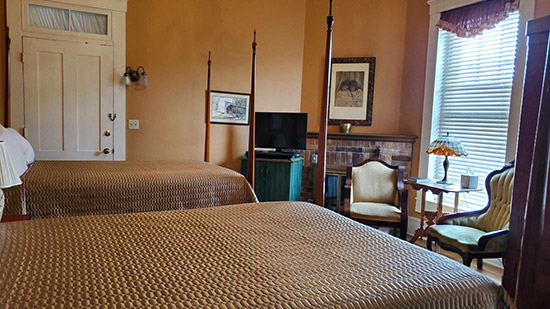
BEDS - Rope, Pencil Post Cherry Wood (reproductions) with hand crocheted coverlet BRASS BED WARMER - Holds hot coals to warm bed CHEST - Birdseye Maple, circa 1800 from Rowe Estate, Corydon, IN ARMOIRE - Walnut 7' tall - Used in "old days" as a closet PICTURE - Squire Boone Mill GAME TABLE - Inlaid Star Pattern
The origin of the word "Hoosier" is not known with certainty.
It has been applied to the inhabitants of Indiana for many
years. As early as 1830, "Hoosier" must have had an accepted
meaning, as John Finley printed a poem that year called "The
Hoosier Nest" in which the word occurs several times.
Governors Wright and O.H. Smith believed that "Hoosier" was a mispronunciation of "Who's Here?" That is the most frequent explanation given to inquirers. Another suggested explanation is that a resident of Indiana had
been captivated by the prowess of the
Hussars during the Napoleonic Wars. In an attempt at self-glorification, he pronounced himself a "Hoosier" rather than a "Hussar". Still others maintain the term is derived from the word "husher" which was a common term for a bully. A baker in Louisville whose last name was Hoosier claimed that people in Indiana liked his gingerbread so well that they came to be known as "Hoosier's Men" or "Hoosier's Customers". Other residents insist the word came from the question "Who's your mother?" or "Who's your father?" Despite it's ambiguous origin, the term is widely used today in reference to the proud residents of Indiana. Many Hoosiers throughout history and today are quite well known for their talents and accomplishments in various fields.



 The origin of the word "Hoosier" is not known with certainty.
It has been applied to the inhabitants of Indiana for many
years. As early as 1830, "Hoosier" must have had an accepted
meaning, as John Finley printed a poem that year called "The
Hoosier Nest" in which the word occurs several times.
Governors Wright and O.H. Smith believed that "Hoosier" was a mispronunciation of "Who's Here?" That is the most frequent explanation given to inquirers.
The origin of the word "Hoosier" is not known with certainty.
It has been applied to the inhabitants of Indiana for many
years. As early as 1830, "Hoosier" must have had an accepted
meaning, as John Finley printed a poem that year called "The
Hoosier Nest" in which the word occurs several times.
Governors Wright and O.H. Smith believed that "Hoosier" was a mispronunciation of "Who's Here?" That is the most frequent explanation given to inquirers. Hussars during the Napoleonic Wars. In an attempt at self-glorification, he pronounced himself a "Hoosier" rather than a "Hussar". Still others maintain the term is derived from the word "husher" which was a common term for a bully. A baker in Louisville whose last name was Hoosier claimed that people in Indiana liked his gingerbread so well that they came to be known as "Hoosier's Men" or "Hoosier's Customers". Other residents insist the word came from the question "Who's your mother?" or "Who's your father?"